
(716) 247-5254 admin@wmarnis.com
How Do You Define Success?

How Do You Define Success?

How Do You Define Success?

That question has been bouncing around in my head a lot lately. Success can be measured in so many different ways—attendance numbers, revenue, social media buzz, or how many people walked away from an event with something meaningful. For me, it always comes back to one thing: What was the mission of the event? And did we fulfill it?

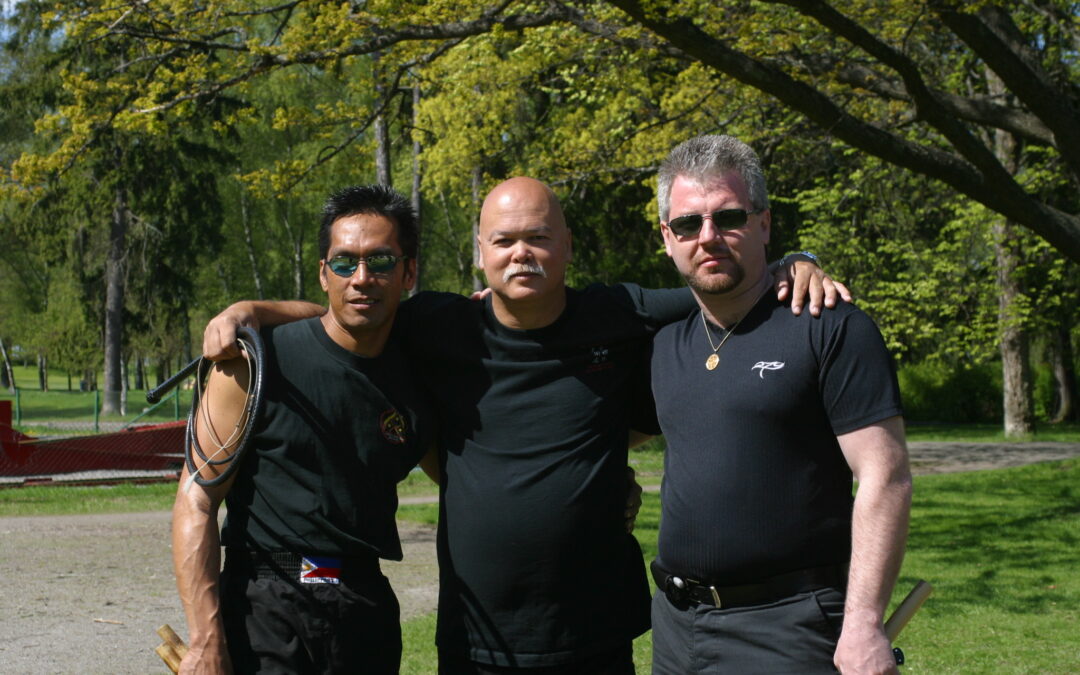
Recently, we hosted the 25th Anniversary Training Camp for the World Modern Arnis Alliance. It was more than just our annual camp. It marked 25 years of the WMAA, and it also happened to coincide with my 60th birthday—and that of my close friend, PG Tye Botting. But with so much going on in my personal life this year, I’ll admit—it was hard to stay locked in on a single mission beyond simply celebrating.

After the event, I found myself asking: What was the defining moment of this camp?

Was it the 75 participants in attendance?
Was it Grandmaster Bobby Taboada traveling up to help celebrate our birthdays?
Was it the 30+ individuals who stepped on the floor to test for black belts and degree ranks?

All of those are powerful indicators of a successful event—but I saw something deeper.

We had four generations of black belts on the floor.

Let that sink in for a moment. That is something I’ve never seen before in Modern Arnis as passed down by Professor Remy Presas.

  • Generation 1: Myself, Datu Tim Hartman.
  • Generation 2: My student, Punong Guro Craig Mason.
  • Generation 3: His students, Chris Workman and Greg Hiltz.
  • Generation 4: Their students, who were testing at the event.

That, to me, is the clearest sign of success—not just of an event, but of a movement. These people didn’t just earn black belts and walk away. They’ve stayed. They’ve trained. They’ve passed on the art. That’s longevity, and more importantly, that’s legacy.

We have black belts ranging from 1st degree all the way to 9th degree. Our Canadian chapter is larger than it was during Professor’s lifetime. We’re regaining ground in the U.S., rebuilding what we lost after his passing. We’ve expanded into new countries like Brazil. And we’re not done yet.

With the 70th Anniversary of Modern Arnis on the horizon, I’ve set a new goal: 70 new black belts by 2027. And based on what I saw at this camp, we’re on the right path.

So how do I define success?

I define it by the legacy we leave behind. I define it by seeing four generations on the mat together, preparing the fifth. That’s the kind of growth that doesn’t happen overnight. That’s the result of commitment, sacrifice, and belief in something bigger than yourself.

That, my friends, is success.

Respectfully,
Datu Tim Hartman
CEO, World Modern Arnis Alliance

#fma #filipinomartialarts #martialarts #selfdefense #success
DNA of Modern Arnis

DNA of Modern Arnis

The DNA of Modern Arnis

I recently saw a screenshot of a post by Dan Anderson critiquing my statement that our students carry Professor Presas’s “DNA” in their movement. Dan thinks that idea is absurd because, as he put it, we all come from different backgrounds and therefore move, think, and train differently. Fair enough—but there’s more to it than that.

First, let’s clear the air about etiquette. If you block someone and then talk about them, you’ve shut down any chance of real dialogue. I’ve invited Mr. Anderson—repeatedly—to join me on our show and discuss this face-to-face. He’s declined. That’s his choice, but I’m a firm believer that if you’re going to call someone out, you should give them the chance to reply. Anything less is just a monologue.

Now, on to the substance.

Dan’s view makes sense if you treat Modern Arnis as nothing more than cross-training—an add-on to patch the gaps in your primary art. That approach has been common outside the Philippines, where many practitioners cherry-pick the stick work and ignore the rest. But that’s not how Professor Presas taught Modern Arnis in the Philippines, and it’s not how I teach it today.

Modern Arnis is a codified system—three books, twenty-five videos, and a curriculum that stands on its own. When you commit to the whole art, a common structure naturally emerges. My students-—from completely different backgrounds—are often told they “move like Tim.” That’s not magic; it’s alignment with a unified system.

Need proof it can be done in FMA? Look at Grandmaster Bobby Taboada’s group. His students—first generation or further down the line—share a recognizable flavor, even though they, too, came from varied martial pasts. A cohesive system produces a cohesive look.

So let’s be clear:

  • Modern Arnis is not merely “the art within your art.” That phrase was Professor’s bridge for cross-ranking, not the end goal.

  • If you only dip a toe in, you won’t move like Professor. You’ll improve your base art, and that’s valuable—but it’s cross-training, not full immersion.

  • If you want to feel how Professor Presas truly moved, step into a program that teaches Modern Arnis as a stand-alone system.

In short, the “DNA” comment isn’t ridiculous; it’s a reminder that when you dive all in, the art leaves a clear signature on your movement—just like Taekwondo, Karate, or any other fully realized system.

If you’re curious what Modern Arnis can add to your toolkit, go train with the cross-training crowd. If you want the complete experience, come see us at the World Modern Arnis Alliance.

Respectfully,
Tim Hartman
Datu – Presas Arnis
CEO, World Modern Arnis Alliance

Passing of a Kenpo Legend

Passing of a Kenpo Legend

It saddens me deeply to share that my friend Richard “Huk” Planas has passed away.
Huk was one of the foremost authorities in Parker’s Kenpo. He spent his life traveling the world, spreading the art he loved so dearly and impacting thousands of martial artists along the way. I was lucky to be one of them.
While I may not be a Kenpo practitioner myself, Huk still had a strong influence on me—especially when it came to how I developed a language for my Filipino martial arts. We taught at seminars together, roomed at events, and had countless conversations—some deep, some funny, and many that only someone like him could truly offer.
Huk was part Filipino and had a background in Filipino martial arts too, which gave our discussions a special kind of depth. I’ll never forget when he visited Buffalo and mentioned a particular guitar he’d been trying to find for years. By some miracle, I found it at a local shop, took him there, and he finally got to bring it home. That night, he played at my place, and I just sat back and listened. It’s a memory I’ll always treasure.
His sense of humor? Well, it was definitely one-of-a-kind—not everyone got it. But those who did knew there was a good heart behind it. At least I always saw that.
I can only imagine the sense of loss the Kenpo community must be feeling right now. One of its true pillars is gone. And though I may not be a brother in Kenpo, I am certainly a cousin through the Filipino arts—and if there’s anything I can do to support his memory or his students, don’t hesitate to reach out.
Rest easy, Huk. You’ll be missed.
Respectfully,
Tim Hartman
Datu – Grand Master Presas Arnis
CEO, World Modern Arnis Alliance
Misquoted? Let’s Clear the Air on the True Essence of Modern Arnis

Misquoted? Let’s Clear the Air on the True Essence of Modern Arnis

Misquoted? Let’s Clear the Air on the True Essence of Modern Arnis
By Datu Tim Hartman

As usual, people misquote me and twist what I say to suit their own agendas. Lately, some are claiming I said I teach “pure Arnis,” then try to discredit that by pointing out how Professor Presas’s system was influenced by other styles over the years.

Here’s the irony: that’s exactly what I’ve been saying all along.

I’ve never claimed that what I do is “pure Filipino martial arts.” And anyone who’s spent any real time around me knows that. Professor Presas traveled the world, trained with countless systems, and constantly evolved his art based on those influences. But the key point people miss is this: it was his synthesis. He took those experiences and turned them into something cohesive. That’s the art we call Modern Arnis.

Modern Arnis can be approached in two ways:

As a cross-training program — “the art within your art” — an idea used to help people integrate elements into their base systems.

Or as a standalone system — which is how I, and others like me, trained and continue to teach it.

The whole “pure” thing wasn’t even my quote. That came from my friend Eric Alexander, who invited me to teach a seminar in Connecticut back in 1991. I asked him why he brought me in, when there were so many instructors closer to him. His answer? That I taught the art as close to Professor’s original expression as you could get without being Professor himself.

He had tried working with others, but saw too many blending Modern Arnis with Tai Chi, Kenpo, and other arts. While he respected their efforts, he was looking for something that preserved the structure and intent of what Professor actually taught.

That’s what I’ve committed myself to. Not someone else’s version. Not a hybrid or fusion. But the actual system Professor Presas developed — the one he traveled the world teaching. He made it a complete martial art, codified with three books and 25 videos. He wasn’t the “Grandmaster of Cross Training.” He was the Grandmaster of Modern Arnis.

Yes, for those who couldn’t or wouldn’t dedicate themselves to learning the full system, he offered options — cross-training paths, modular content, and certifications. But he also built a curriculum for those who did want to carry the system forward in its entirety.

I lived that. I trained under him. I tested under him. And I produced more black belts during his lifetime than any other instructor or state — thirty black belts ranging from 1st through 3rd degree, all while many so-called leaders were still trying to figure out the basics.

While they were still learning the system, I was learning how to teach it. And I was already building the next generation. Today, we’re four generations deep in our lineage, with active students still training in the system.

Yes, I cross-train. Yes, I study the roots of our techniques. But I’m crystal clear about what comes from Professor, what comes from my own innovations, and what came from other influences.

There’s a difference between being a student of the art and being a steward of the system. I chose the latter.

Respectfully
Datu Tim Hartman
World Modern Arnis

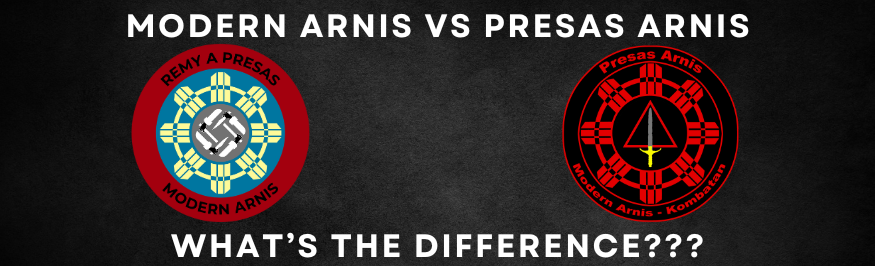
What’s the Difference Between Presas Arnis and Modern Arnis?

What’s the Difference Between Presas Arnis and Modern Arnis?

I get this question all the time—what’s the difference between Presas Arnis and Modern Arnis? And while the answer is simple on the surface, it’s also deeply layered. 

Let’s start from the beginning.

Unlike many who transitioned into Filipino Martial Arts from other systems, I started in FMA. I didn’t cross-train into it—I was fully immersed from day one. This shaped how I learned, how I moved, and ultimately, how I teach. While many of my classmates brought in their striking and grappling from Karate, Kenpo, Taekwondo, or other arts, I had no fallback system. This was the system.

We built our Modern Arnis from the ground up—no safety net. And the beauty of Professor Remy Presas’s system is that it was complete. Just look at the forms: twelve in total—four with sticks and eight empty hand. Like traditional kata in other arts, when you break them down, every piece you need for a complete empty-hand system is right there.

Now, over the years, Professor saw my dedication. He taught me more than many of my peers, and I supplemented that with material from other Filipino systems. I wasn’t wearing FMA training wheels. While others picked up the stick only when Professor came to town, I lived it. I’ll admit, at times it frustrated me to see people treating Modern Arnis like a side gig—but I was also thankful. Their participation helped keep Professor traveling, which gave me more access to him.

Fast forward to 1999.

Professor was in the Philippines when his brother, Grandmaster Ernesto Presas, fell into a coma. His students reached out to me, hoping I could get Professor to make peace with his brother before it was too late. I called Professor. After a long conversation, he agreed. The brothers reconciled.

Tragically, not long after, Professor passed away.

But their reunion had a profound impact. Shortly after, Ernesto held a seminar nearby. I attended, and from that point on, I began incorporating Kombatan into my training. Even before Professor passed, he opened the door for me to train with Ted Buot, the designated successor of Balintawak. Not as a departure from Modern Arnis, but as a way to better understand its roots.

Professor always said systems like Kuntaw, Sikaran, and Balintawak were part of his foundation. So, I followed that path—during his lifetime and beyond.

For years, I toyed with the idea of rebranding what I do to reflect the broader expression of my journey. I’ve trained and taught Modern Arnis, Kombatan, Balintawak, Sikaran, and Kuntaw—individually and together. But at my school, I teach a blended system, and after Professor’s passing, I gave it a name that honored both brothers: Presas Arnis.

This wasn’t about moving away from Modern Arnis. It was about respecting both of the Presas brothers and everything they gave the martial arts world.

Look at the pattern:

Parker’s Kenpo wasn’t called that by Mr. Parker—it was his students who named it that in his honor.

Shotokan came from Gichin Funakoshi’s pen name, “Shoto,” and his students coined the name after his passing.

So I followed tradition—Presas Arnis is my tribute to the family legacy.

To be clear: I still teach Modern Arnis, Kombatan, and the others as separate systems. Each has its own curriculum. I’ve codified them all so I can teach them cleanly and respectfully. But my personal expression—the way I move, teach, and fight—is a blend of everything I’ve studied. It’s contextual. It’s adaptable. And it’s authentic to the Presas family systems at the core.

So no—I haven’t abandoned Modern Arnis. I’ve expanded my reach while staying grounded in its foundation. Presas Arnis is my way of giving credit where it’s due and keeping the legacy alive in its full expression.

I hope this clears things up for those who’ve asked—or speculated.

Respectfully,

Tim Hartman
Datu – Grandmaster, Presas Arnis
CEO, World Modern Arnis Alliance