(716) 247-5254 admin@wmarnis.com
Presas Arnis vs. Presas Legacy – Understanding the Difference

Presas Arnis vs. Presas Legacy – Understanding the Difference

Presas Arnis vs. Presas Legacy – Understanding the Difference

I’m often asked about the difference between Presas Arnis, which I teach, and the Presas Legacy organization in the Philippines. The explanation is simple: I represent the family systems directly.

I was fortunate to have a relationship with all three Presas brothers. I studied under Grandmaster Remy until his passing in 2001 and helped the brothers reconnect before their time together was cut short. During that time, I also trained in Kombatan under Great Grandmaster Ernesto, who promoted me to 9th degree and Grandmaster in 2007.

When I taught seminars, I combined material from both brothers. To avoid debates about which version was “correct,” I used the name Presas Arnis as an umbrella. In 2012, shortly after Ernesto’s passing, I officially launched the Presas Arnis brand, while continuing to certify students in both Modern Arnis and Kombatan.

By 2018, at the Kombatan Super Camp in Finland, we were already using the Presas Arnis name prominently. Others later followed this trend. Eventually, the Presas Legacy organization was formed in the Philippines to umbrella all Presas family systems for those without a direct connection to the brothers.

Am I part of that group? No. I have a direct relationship with the Presas brothers and still maintain a close friendship with Roberto, the surviving brother. My teaching record stands on its own, with seminars across many states and countries each year.

I understand why some might join an umbrella organization for community or guidance. Everyone has their own path. For me, Presas Arnis stands on its own, separate from the Presas Legacy group.

I hope this clarifies things for everyone.

Respectfully,
Tim Hartman
Datu – GM Presas Family Arnis
CEO, World Modern Arnis Alliance

#modernarnis #filipinomartialarts #selfdefense

Why People Said I “Left” Modern Arnis – And Why They’re Wrong

Why People Said I “Left” Modern Arnis – And Why They’re Wrong

Why People Said I “Left” Modern Arnis – And Why They’re Wrong

For years, I’ve heard the same rumor: “Tim left Modern Arnis.”

Some even claim it happened while Professor was still alive — years before his diagnosis. And I’ve always wondered… where on earth does that come from?

During that time, my students were passing black belt tests. Professor had me teaching not just the forms, but other key aspects of the art. People sought me out specifically to prepare for their own black belt tests. That doesn’t sound like leaving the art to me.

But then came the ’99 Michigan camp. I was talking with Randy Shea when he suddenly said, “You don’t even do Modern Arnis anymore.” It caught me completely off guard. I had no idea how to unpack that statement.

When I thought about it, I realized the opposite was true — I was doing a deeper dive into Modern Arnis than most. The difference was that I approached it as a standalone system, not just “the art within your art.”

It started with language. Professor Presas often used English names for techniques. Nothing wrong with that, but I wanted to connect more closely to the art’s Filipino roots. If I was teaching Filipino martial arts, I wanted Filipino terminology whenever possible.

Take the “six-count drill,” for example — more authentically called sumbrada. We also had a ten-count version. So when I taught it, I’d say: “We’re going to do sumbrada drill, six-count version.” Still in line with how Professor referred to it, but with the original term front and center.

Another example: gunting, which means “to scissor.” Many know it as a limb destruction. If you look at the opening of the second form, you see limb destructions on both the left and right sides. If you only did Modern Arnis as cross-training, you might miss that connection. As my primary system, I had the opportunity — and the reason — to go deeper.

That ’99 camp was also the year Professor called me Datu. At the 2000 Michigan camp, I tested for my 6th degree. Professor announced it as the highest black belt test in the United States — the highest in over 17 years — and told me, “Now you’re a Datu in their eyes, because you were already a Datu in mine.”

Yet after his passing, the same rumor persisted. People pointed to the fact that I trained in Kuntaw, Sikaran, Balintawak, and other Filipino systems as “proof” I’d left the art. But here’s the thing — I was doing that while Professor was still alive. And he supported it.

Modern Arnis is a hybrid art. Professor himself told me about the systems that influenced it — Kuntaw, Sikaran, Balintawak, and more. He personally introduced me to Balintawak Grandmaster Ted Buot in Detroit, where I got direct access to one of Modern Arnis’s biggest influences. I trained with Wally Jay, whose Small Circle Jujitsu also shaped our curriculum.

I didn’t study these systems to “run away” from Modern Arnis — I studied them to understand it more completely. Unfortunately, jealousy and insecurity make some people rewrite the story.

Today, I teach a Presas Arnis curriculum — an umbrella that includes the systems I’ve learned. But when it’s time to teach Modern Arnis, Balintawak, Kuntaw, or Sikaran, I can separate them and do each justice. I know exactly what belongs to each art.

Here’s my philosophy: you can’t know where you’re going if you don’t know where you’ve come from. Innovation is important, but it has to be built on a solid foundation. As I tell my students — algebra, calculus, and trigonometry are just advanced math, but they’re impossible without mastering basic math first. Advanced techniques are simply sophisticated basics.

So, did I “leave” Modern Arnis? No. I went deeper than most were willing to go. You can decide for yourself — but I know the truth.

Respectfully,
GM Datu Tim Hartman
CEO, World Modern Arnis Alliance

#fma #filipinomartialarts #martialarts #selfdefense #modernarnis


What’s in a Logo? The Meaning Behind Modern Arnis & World Modern Arnis Symbols

What’s in a Logo? The Meaning Behind Modern Arnis & World Modern Arnis Symbols

 What’s in a Logo? The Meaning Behind Modern Arnis & World Modern Arnis Symbols

Over the years, I’ve had a lot of conversations with people about our logos—both the Modern Arnis emblem and the World Modern Arnis logo—and I’m always surprised by how many folks don’t know what they actually mean. So, I figured it’s time to break it down and share the story behind the symbols we wear with pride.

Modern Arnis Logo

The Modern Arnis emblem is packed with meaning. The sun, along with the red and blue, comes straight from the Filipino flag, honoring the art’s cultural roots. That connection to the Philippines is something we always strive to respect and preserve.

The pattern of arms, sticks, and swords isn’t just a cool design—it represents the sinawali or “weaving” flow of movement we practice. It’s also a visual of our philosophy: structure, motion, and unity. The interlocking arms stand for the unity among practitioners, and the square formed within the circle reflects the two lines of attack: linear and circular.

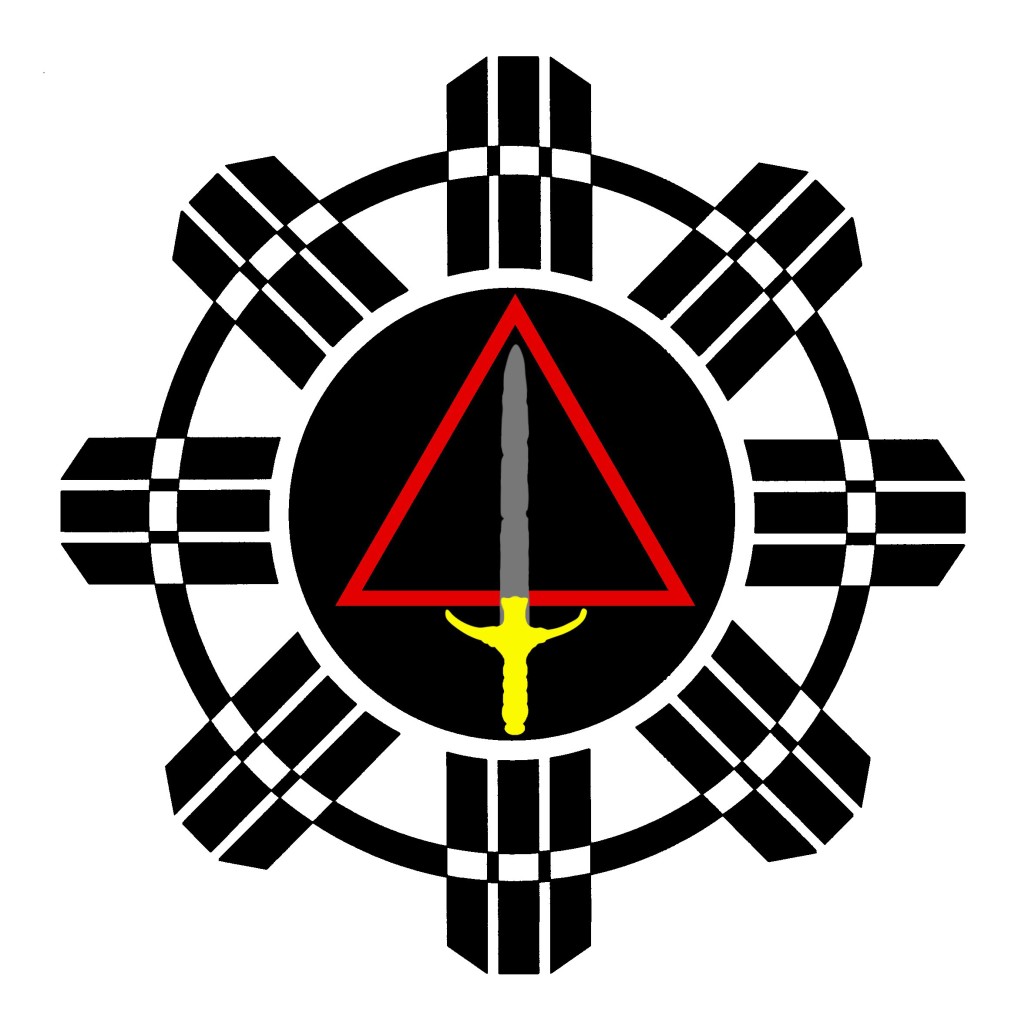
World Modern Arnis Logo

The sun here also pays tribute to the Filipino flag and to Professor Remy Presas, the founder of Modern Arnis. The eight rays of the sun represent the eight angles of attack we teach.

The black in the logo is a sign of mourning and respect for the Presas brothers—Remy, Ernesto, and Roberto—whose contributions shaped the art as we know it.

The triangle holds even more meaning. It represents our 3 x 3 Matrix:

  • The Presas brothers: Remy, Ernesto, and Roberto
  • The three aspects: Martial Art, Martial Sport, and Martial Combat
  • The three pillars: Fitness, Form, and Function

The sword in the center? That’s all about the warrior spirit—and it also acknowledges the non-Filipino influences that have helped Modern Arnis evolve.

I hope this gives you a better sense of what our logos stand for—and why we wear them with pride. If you have a logo of your own, I’d love to hear the story behind it. Whether it’s packed with symbolism or just an awesome design, there’s always something to be said about how we choose to represent ourselves and our journey.

Respectfully,
Datu Tim Hartman
Grand Master of Presas Arnis
CEO, World Modern Arnis
“The FMA Ambassador”

#ModernArnis #WorldModernArnis #FMA #FilipinoMartialArts #PresasLegacy #Arnis #MartialArtsLogos #Sinawali #FilipinoCulture #StickFighting #MartialArtsPhilosophy #WMAA #DatuHartman #FMACommunity

The Blueprint of Modern Arnis

The Blueprint of Modern Arnis


The Blueprint of Modern Arnis
A structured look at the complete curriculum of Remy Presas’s legacy
By Datu Tim Hartman, CEO, World Modern Arnis Alliance

Modern Arnis, developed by the late Grandmaster Remy Amador Presas, is far more than a collection of stick drills or sparring techniques. It’s a complete martial arts system—a structured, progressive curriculum that integrates weapon work, empty-hand techniques, grappling, and flow-based training. What sets it apart is how well everything fits together. The system isn’t built on random concepts—it’s built on layers of understanding, where each element connects to and reinforces the next.

Let’s walk through what that blueprint looks like.

Foundations: Where It All Begins
Modern Arnis starts like any good martial art should—with fundamentals. The first step is establishing strong striking mechanics using basic tools: forefist punches, reverse punches, hammerfists, uppercuts, and hooks. These techniques are paired with foundational kicks like front, side, and back kicks, along with elbow strikes and knees that cover multiple ranges. From day one, movement and positioning matter just as much as power.

But striking is only part of the equation. Defensive mechanics are introduced right alongside the offense. Students learn to block—whether it’s an inward block, an outward deflection, a downward parry, or an X-block covering the high line. These basics are then layered with footwork and body positioning, eventually leading into one of the system’s most important concepts: trapping hands. Trapping builds control, reaction timing, and close-range dominance—skills that appear again and again in both the weapon and empty-hand portions of the art.

Weapons Training and the 12 Angles of Attack
Weapon work enters early in training, starting with the 12 angles of attack—an essential framework in Filipino martial arts. Each angle teaches not just how to strike, but how to defend, move, and control space. Students learn how to handle attacks from every direction, along with the appropriate parries, blocks, and counters.

What’s unique about Modern Arnis is that this material isn’t isolated. Every weapon movement ties directly back to the empty-hand material. Whether you’re holding a stick or not, the angles, mechanics, and intent remain the same. That’s where the system really starts to open up.

One of the first major drills that ties everything together is Block–Check–Counter. This exercise teaches students to defend against a strike, control the opponent’s weapon hand, and follow up with their own attack—all in one fluid sequence. It’s simple in theory but deep in practice, and it forms the foundation for almost everything else in the art. With or without a weapon, this drill teaches timing, positioning, and how to transition from defense to offense without hesitation.

Refining the Tools: Advanced Striking and Flow
As a student develops, they’re introduced to various striking styles—each with its own purpose. Figure-eight patterns build smooth transitions. Rompida develops explosive vertical strikes. Banda y Banda reinforces horizontal power, and Abaniko introduces tight rotational movement through fan-like strikes. These aren’t just drills; they’re tools for power generation, rhythm, and controlled aggression.

These patterns also serve a dual purpose. While they work well in combat, they’re equally valuable for attribute development. They train your hand speed, your coordination, and your ability to hit targets from unconventional angles—all of which show up in more advanced drills and sparring.

Disarming: Control Through Precision
Professor Presas designed a clear and memorable approach to disarming. Each of the 12 angles of attack was paired with a specific disarm, allowing students to build muscle memory and conceptual understanding at the same time. But this was never meant to be the end point.

As a student progresses, those disarms are applied across different angles, situations, and types of attacks. The material becomes less about memorizing techniques and more about reading positions and using leverage and timing to take control. At the advanced level, disarms are even reversed against one another, developing a deeper understanding of counters, flow, and reactive movement.

Dumog and the Close-Quarters Game
While many associate Filipino Martial Arts with sticks and knives, Modern Arnis also includes a strong grappling component known as Dumog. It covers a range of locking, holding, and throwing techniques—many of which flow naturally from the trapping and striking sequences already in the curriculum.

Rather than being treated as separate modules, these grappling techniques are integrated into forms, drills, and partner flows. They give practitioners the ability to manage close-quarters encounters, control posture, and neutralize an opponent without relying solely on striking or weapons.

Interactive Drills: Timing, Sensitivity, and Flow
A major strength of Modern Arnis is the use of partner drills to develop real-time sensitivity and control. Drills like Palis–Palis train the student to redirect and pass incoming strikes, developing timing and tactile awareness. Sinawali—often seen as a basic double-stick weaving drill—evolves into more functional versions like Sinawali boxing, which includes head movement, zoning, and entry into trapping or takedowns.

Another core drill is the Crossada Flow, sometimes referred to as gunting, or “scissoring.” This drill emphasizes intercepting incoming strikes and flowing directly into counter techniques, whether that’s a strike, a disarm, or a control.

Then there’s Sumbrada, the six-count partner drill. This structured exchange teaches rhythm, pattern recognition, and smooth transitions between attack and defense. It’s a foundational piece for developing reaction under pressure without resorting to rigidity or memorization.

Tapi–Tapi: The Pinnacle of Partner Play
Eventually, everything leads to Tapi–Tapi—a dynamic, semi-alive training structure that blends all previous material. It’s more than a drill; it’s a method of live interaction that teaches timing, sensitivity, counters, and recounters.

There are two major versions of Tapi–Tapi in the Modern Arnis curriculum. The first, which is based on Block–Check–Counter, is built around timing, reaction, and counter-for-counter movement. It’s nuanced and fluid, with fewer repetitions and more spontaneity. The second version is a Sinawali-based semi-sparring format—more structured and rhythm-oriented, often used to introduce students to the concepts in a more digestible way.

What’s important to note is that both versions prepare practitioners for live application. They also explore interactions like right-vs-left and left-vs-right—something Professor Presas, being a left-hander himself, intentionally built into the curriculum. The goal is to ensure adaptability no matter the opponent or the hand they fight with.

The Forms: Cataloging the System
Modern Arnis includes 12 forms (anyo): four weapon-based and eight open-hand. These forms act as a library for the system, containing key concepts, sequences, and transitions. They include striking, trapping, disarms, throws, and grappling—all presented in a way that encourages repetition, refinement, and reflection.

Six of these forms include explicit trapping sequences, reinforcing the use of close-quarters control. They’re more than choreographed routines—they’re training tools that showcase how the individual components of the system are meant to connect in motion.

Final Thoughts: Why It All Matters
The genius of Modern Arnis lies in its structure. Each layer of training supports the next. Striking leads into trapping. Trapping leads into disarming. Disarming flows into control. Control transitions into throws. Forms reinforce the techniques. Drills bring it all to life.

Everything is taught with the expectation that the student will practice:

  • With a weapon
  • Without a weapon
  • Against a weapon
  • Right- and left-handed

This creates a practitioner who’s not just memorizing techniques—but truly understanding movement, timing, and control.

Modern Arnis isn’t just an art about sticks. It’s about strategy, adaptability, and intelligent training. The blueprint is there—you just need to follow it.


Respectfully,
Datu Tim Hartman
CEO, World Modern Arnis Alliance

#ModernArnis #FilipinoMartialArts #ArnisBlueprint #FMAeducation #RemyPresasLegacy #MartialArtsStructure #StickFighting #DatuTimHartman #WorldModernArnisAlliance #TapiTapi #Dumog #Sinawali #FMAcurriculum #ArnisTraining #FilipinoWarriorArts #CompleteMartialSystem #WeaponsAndEmptyHand #TrainBothSides

25 Years Ago Today – A Turning Point in My Martial Arts Journey

25 Years Ago Today – A Turning Point in My Martial Arts Journey

25 Years Ago Today – A Turning Point in My Martial Arts Journey

In every martial artist’s path, there are defining moments—turning points that reshape how we train, how we teach, and how we see the art. For me, one of the biggest happened exactly 25 years ago: I officially began training in Balintawak Eskrima under the late Grandmaster Ted Buot.

Many of you have heard the story, but for those who haven’t—it all started with Professor Remy Presas. He once told me, “If you want to become a real stick fighter, train with Ted.” At the time, I didn’t fully grasp the weight of that advice, but I quickly found out why he said it.

What many don’t realize is that Balintawak was the last system Professor Presas trained in before creating Modern Arnis. In fact, he was one of Anciong Bacon’s top fighters. Because of my deep background in Modern Arnis, I began to recognize the roots of our system—tracing key concepts and techniques directly back to Balintawak. And that insight began changing me almost immediately.

My live hand transformed. I started setting traps, creating openings, and drawing reactions—not by telling partners what to do, but by baiting them into predictable patterns. That strategic depth—that ability to manipulate the flow—came straight from the Bacon–Buot lineage.

And as I continued training, one thing became clear: Balintawak didn’t replace Modern Arnis—it revealed deeper layers of it. I wasn’t switching systems; I was expanding my understanding. That’s an important distinction. Too often people think it’s either/or. But the truth is, both arts brought different tools to the table, and knowing both gave me a distinct advantage. When I sparred with players from either system, I had answers—because I could see both playbooks.

As I grew in Balintawak, I began teaching the relationship between Modern Arnis and Balintawak, helping others see how the two systems complement one another. Eventually, with Grandmaster Buot’s blessing, I began conducting dedicated Balintawak seminars. It was an incredible honor to be one of only two people he personally authorized to teach his material in that format.

Now here’s something I don’t think enough people talk about: Professor Presas wasn’t trying to keep us from Balintawak—he was pointing us back toward it. Over the years, he sent several of us to train with Manong Ted. And every time we saw him afterward, he’d ask what we had learned. In my opinion, he was trying to return to his roots. Unfortunately, his seminar schedule was relentless, and it left little room for that kind of focused retraining.

But he trusted students like me—people who weren’t leaving Modern Arnis, but were trying to understand it on a deeper level. I truly believe that if Professor were still with us today, Balintawak would have had a far greater influence on the evolution of Modern Arnis.

In the end, this journey didn’t just change how I move—it changed how I think. It gave me new eyes to see the arts I’ve devoted my life to. And for that, I’m forever grateful to Manong Ted—for his time, his wisdom, and his trust.

His influence still guides everything I do.

Respectfully,
Tim Hartman
Remy Presas Arnis
Bacon–Buot Balintawak

Stick It to Hunger 2025 – A Smashing Success!

Stick It to Hunger 2025 – A Smashing Success!

Stick It to Hunger 2025 – A Smashing Success!

This weekend, Horizon Martial Arts hosted the 2nd annual fundraiser for the West Seneca Food Bank, and this year’s theme said it all: Stick It to Hunger

This was an official event of the World Modern Arnis Alliance, part of our ongoing mission to give back and support community needs through martial arts.

Proudly supported by the MA Tour Tournament League, this event brought together martial artists—mostly stick fighters—for a day filled with action, camaraderie, and purpose. (Yes, that’s where “Stick It” comes from. LOL.)

We were honored to welcome five incredible schools, including:

TKO Martial Arts – Erie, PA
MSD Kempo – North Tonawanda, NY
Amerikick – Batavia, NY
And of course, our home team at Horizon MA and other supporting schools

Competitors faced off in Sport Karate, Sport Jiu-Jitsu, and Sport Arnis Fighting for two hours of Rock’em Sock’em action—with masters and grandmasters on the floor, helping others elevate their game and deepen their art. ?

Special thanks to Ray Nowicki of the West Seneca Chamber of Commerce for stopping by, making a generous donation, and showing his support.

We raised $600 in cash
Collected a huge amount of food
And we’re still not donedonations are open through August 1st!

If you’d like to help us Stick It to Hunger, click the link below to donate. Every dollar or can helps feed a local family in need.

Thank you to everyone who trained, donated, and supported this great cause. Let’s keep building strong martial artists and stronger communities.

Datu Tim Hartman
Horizon Martial Arts | World Modern Arnis Alliance

#StickItToHunger #MartialArtsForACause #WMAA #HorizonMA #MATour #BlackBeltsGiveBack #WestSeneca #CommunityStrong #ModernArnis #TKOMartialArts #MSDKempo #Amerikick #FMA #MartialArtsUnite