(716) 247-5254 admin@wmarnis.com
Misquoted? Let’s Clear the Air on the True Essence of Modern Arnis

Misquoted? Let’s Clear the Air on the True Essence of Modern Arnis

Misquoted? Let’s Clear the Air on the True Essence of Modern Arnis
By Datu Tim Hartman

As usual, people misquote me and twist what I say to suit their own agendas. Lately, some are claiming I said I teach “pure Arnis,” then try to discredit that by pointing out how Professor Presas’s system was influenced by other styles over the years.

Here’s the irony: that’s exactly what I’ve been saying all along.

I’ve never claimed that what I do is “pure Filipino martial arts.” And anyone who’s spent any real time around me knows that. Professor Presas traveled the world, trained with countless systems, and constantly evolved his art based on those influences. But the key point people miss is this: it was his synthesis. He took those experiences and turned them into something cohesive. That’s the art we call Modern Arnis.

Modern Arnis can be approached in two ways:

As a cross-training program — “the art within your art” — an idea used to help people integrate elements into their base systems.

Or as a standalone system — which is how I, and others like me, trained and continue to teach it.

The whole “pure” thing wasn’t even my quote. That came from my friend Eric Alexander, who invited me to teach a seminar in Connecticut back in 1991. I asked him why he brought me in, when there were so many instructors closer to him. His answer? That I taught the art as close to Professor’s original expression as you could get without being Professor himself.

He had tried working with others, but saw too many blending Modern Arnis with Tai Chi, Kenpo, and other arts. While he respected their efforts, he was looking for something that preserved the structure and intent of what Professor actually taught.

That’s what I’ve committed myself to. Not someone else’s version. Not a hybrid or fusion. But the actual system Professor Presas developed — the one he traveled the world teaching. He made it a complete martial art, codified with three books and 25 videos. He wasn’t the “Grandmaster of Cross Training.” He was the Grandmaster of Modern Arnis.

Yes, for those who couldn’t or wouldn’t dedicate themselves to learning the full system, he offered options — cross-training paths, modular content, and certifications. But he also built a curriculum for those who did want to carry the system forward in its entirety.

I lived that. I trained under him. I tested under him. And I produced more black belts during his lifetime than any other instructor or state — thirty black belts ranging from 1st through 3rd degree, all while many so-called leaders were still trying to figure out the basics.

While they were still learning the system, I was learning how to teach it. And I was already building the next generation. Today, we’re four generations deep in our lineage, with active students still training in the system.

Yes, I cross-train. Yes, I study the roots of our techniques. But I’m crystal clear about what comes from Professor, what comes from my own innovations, and what came from other influences.

There’s a difference between being a student of the art and being a steward of the system. I chose the latter.

Respectfully
Datu Tim Hartman
World Modern Arnis
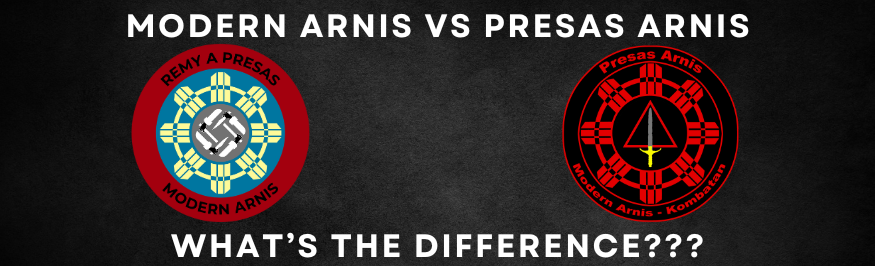
What’s the Difference Between Presas Arnis and Modern Arnis?

What’s the Difference Between Presas Arnis and Modern Arnis?

I get this question all the time—what’s the difference between Presas Arnis and Modern Arnis? And while the answer is simple on the surface, it’s also deeply layered. 

Let’s start from the beginning.

Unlike many who transitioned into Filipino Martial Arts from other systems, I started in FMA. I didn’t cross-train into it—I was fully immersed from day one. This shaped how I learned, how I moved, and ultimately, how I teach. While many of my classmates brought in their striking and grappling from Karate, Kenpo, Taekwondo, or other arts, I had no fallback system. This was the system.

We built our Modern Arnis from the ground up—no safety net. And the beauty of Professor Remy Presas’s system is that it was complete. Just look at the forms: twelve in total—four with sticks and eight empty hand. Like traditional kata in other arts, when you break them down, every piece you need for a complete empty-hand system is right there.

Now, over the years, Professor saw my dedication. He taught me more than many of my peers, and I supplemented that with material from other Filipino systems. I wasn’t wearing FMA training wheels. While others picked up the stick only when Professor came to town, I lived it. I’ll admit, at times it frustrated me to see people treating Modern Arnis like a side gig—but I was also thankful. Their participation helped keep Professor traveling, which gave me more access to him.

Fast forward to 1999.

Professor was in the Philippines when his brother, Grandmaster Ernesto Presas, fell into a coma. His students reached out to me, hoping I could get Professor to make peace with his brother before it was too late. I called Professor. After a long conversation, he agreed. The brothers reconciled.

Tragically, not long after, Professor passed away.

But their reunion had a profound impact. Shortly after, Ernesto held a seminar nearby. I attended, and from that point on, I began incorporating Kombatan into my training. Even before Professor passed, he opened the door for me to train with Ted Buot, the designated successor of Balintawak. Not as a departure from Modern Arnis, but as a way to better understand its roots.

Professor always said systems like Kuntaw, Sikaran, and Balintawak were part of his foundation. So, I followed that path—during his lifetime and beyond.

For years, I toyed with the idea of rebranding what I do to reflect the broader expression of my journey. I’ve trained and taught Modern Arnis, Kombatan, Balintawak, Sikaran, and Kuntaw—individually and together. But at my school, I teach a blended system, and after Professor’s passing, I gave it a name that honored both brothers: Presas Arnis.

This wasn’t about moving away from Modern Arnis. It was about respecting both of the Presas brothers and everything they gave the martial arts world.

Look at the pattern:

Parker’s Kenpo wasn’t called that by Mr. Parker—it was his students who named it that in his honor.

Shotokan came from Gichin Funakoshi’s pen name, “Shoto,” and his students coined the name after his passing.

So I followed tradition—Presas Arnis is my tribute to the family legacy.

To be clear: I still teach Modern Arnis, Kombatan, and the others as separate systems. Each has its own curriculum. I’ve codified them all so I can teach them cleanly and respectfully. But my personal expression—the way I move, teach, and fight—is a blend of everything I’ve studied. It’s contextual. It’s adaptable. And it’s authentic to the Presas family systems at the core.

So no—I haven’t abandoned Modern Arnis. I’ve expanded my reach while staying grounded in its foundation. Presas Arnis is my way of giving credit where it’s due and keeping the legacy alive in its full expression.

I hope this clears things up for those who’ve asked—or speculated.

Respectfully,

Tim Hartman
Datu – Grandmaster, Presas Arnis
CEO, World Modern Arnis Alliance

Modern Arnis: More Than Just “The Art Within Your Art”

Modern Arnis: More Than Just “The Art Within Your Art”

Modern Arnis: More Than Just “The Art Within Your Art”

By Datu Tim Hartman

I’ve always had an issue with how Modern Arnis gets reduced to just a catchphrase—“the art within your art.” That line has been repeated so often, and so casually, that it’s led to a widespread misunderstanding of what Modern Arnis truly is.

For me, it wasn’t just an add-on. Modern Arnis was my first martial art—and I trained it as a complete system from day one. At the Filipino Karate Academy, under John Bryant and with Professor Remy Presas as a financial backer, we did it all: striking, kicking, locking, throwing, and of course, the signature weapon work that defines Filipino martial arts. This wasn’t a hybrid or a patchwork—it was a full system.

The phrase “the art within your art” came from a magazine article in the early ’80s. It may have been catchy, but it’s been misused ever since. People started using it as an excuse to mash together whatever they wanted and call it Modern Arnis. But that’s not how Professor Presas taught it. He created a structured system—with books, videos, rankings, and a clear methodology. That’s not the work of someone just adding flavor to another art. That’s someone building a legacy.

Saying it’s only “the art within your art” is like saying it doesn’t have what it needs to stand on its own—that Professor wasn’t a complete martial artist, or that what he was doing in the Philippines was only supplementary. But they didn’t have “the art within your art” there. Modern Arnis was a complete system from the start. It stood on its own, and it still does.

So why am I so vocal about this? Because I teach Modern Arnis as a complete system—and I believe that’s what Professor Presas intended. When people treat it as “just a supplement,” it implies that Modern Arnis isn’t enough on its own. And that couldn’t be further from the truth.

Now let me be clear: I have nothing against cross-training. There’s real value in blending arts. But there’s a difference between incorporating Arnis into your system and actually studying Modern Arnis as its own complete art. If you want to do the latter, you need to train with someone who teaches it that way.

Too often, people overlook the fact that Modern Arnis stands on its own. Maybe it doesn’t fit their narrative. Maybe they just don’t know better. But the truth is, it’s a full-fledged martial system—and it deserves to be respected as such.

At the end of the day, this is about honoring the art, honoring Professor Presas, and honoring those of us who have dedicated our lives to keeping his system intact—not as a footnote, but as a complete martial art.

Respectfully,
Datu Tim Hartman
World Modern Arnis Alliance

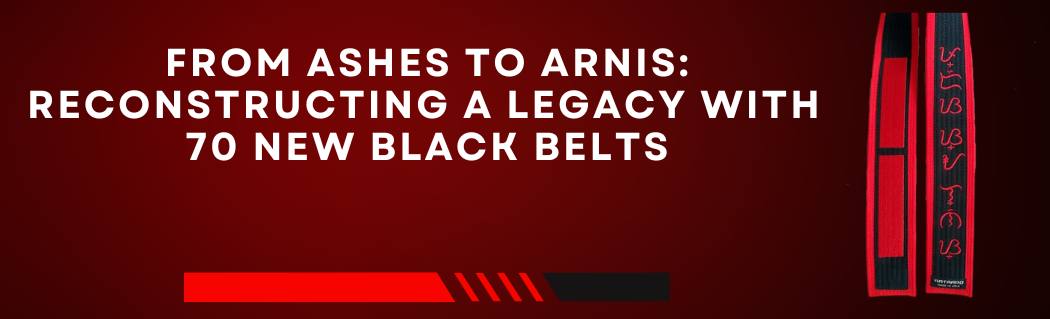
From Ashes to Arnis: Reconstructing a Legacy with 70 New Black Belts

From Ashes to Arnis: Reconstructing a Legacy with 70 New Black Belts

As we approach the 70th anniversary of Modern Arnis, it’s important to reflect on the journey we’ve taken and the challenges we’ve faced. When Professor Presas passed away, we experienced a significant loss, with 80-90% of our community disappearing. This highlighted the urgent need for reconstruction and rebuilding to ensure a future generation of Modern Arnis practitioners.

In honor of this milestone, we’re setting three ambitious goals: to achieve 70 levels of black belt promotions, to have 70 black belt promotions, and ultimately to produce 70 brand new black belts. These goals aren’t just about numbers; they’re about revitalizing our ranks, rebuilding a strong and vibrant community, and ensuring that the legacy of Modern Arnis continues for generations to come.

This movement is not about randomly promoting people or rubber-stamping promotions. We are dedicated to training individuals to become competent martial artists who will properly represent the art now and into the future.

To make this vision a reality, we’ll be hosting a series of seminars over the next two years, culminating in our anniversary camp in May 2027. While we may not be able to accommodate everyone at the camp, our year-end goal remains to reach 70 new black belts. This journey of reconstruction and renewal is one we invite everyone to be a part of, honoring our past while building a strong future for Modern Arnis.

For those interested in becoming part of this movement, please reach out to me at datutim@gmail.com or on WhatsApp at 716-432-0600. Together, we can rebuild and ensure a bright future for Modern Arnis.

“Controversy, Growth, and the Mission to Elevate Filipino Martial Arts: My Journey in the Social Media Spotlight”

“Controversy, Growth, and the Mission to Elevate Filipino Martial Arts: My Journey in the Social Media Spotlight”

Controversy, Growth, and the Mission to Elevate Filipino Martial Arts: My Journey in the Social Media Spotlight

For those of you who’ve known me for a while, you probably know I’ve always had a solid online presence. I started out on the early discussion forums like FMA Talk and Martial Talk, and later moved to platforms like Facebook and Instagram. Filipino martial arts has always been my passion and profession, allowing me to provide for my family. But as times change, I’ve had to find new ways to reinvent myself and get my message out there.

In March, I signed with a social media company to help strategize. We talked about how to grow my reach. One quick way is using content that involves women in revealing outfits or pushing sexual innuendos—but that’s not what I stand for. Instead, we decided to focus on good content and dive into controversial topics.

We launched this strategy in early April. Back then, I had around 7,100 followers across Facebook, Instagram, TikTok, and YouTube. Fast forward to mid-September, and I now have nearly 300,000 followers across those platforms, with my content reaching close to 38 million views.

Now, some people only see a few of my videos and judge from there. I’ve had fun back-and-forths with some viewers and covered topics like how UFC has real contact but lacks context for real-world self-defense. Of course, this has brought out the trolls. But I don’t shy away from controversy or back down from online harassment.

I’ve had some solid conversations with open-minded folks who can agree to disagree, but then there are others who resort to childish behavior—like issuing fake challenges, body-shaming, and saying they’ll fight me just to troll. It’s clear that COVID has affected social interactions, with some adults behaving like adolescents. I’ve even had people claim they’ll “raid” my studio in the name of their system, which feels like a bad Bruce Lee movie plot.

There are also folks in the Filipino martial arts world trying to ride on my success. One former classmate publicly stated that Modern Arnis doesn’t hate BJJ. Well, neither do I—I’m working on my purple belt and was one of the first in my area to bring in a certified BJJ instructor in the ’90s. Another individual, who calls himself a social influencer, tried to “out” me for doing staged debates with someone from the same company. We never hid that fact; it was all in good fun, with tongue-in-cheek humor. But instead of discussing it with me directly, this person made a video to cash in on my popularity.

Has it been worth tackling controversial topics each month to get my content noticed? Absolutely. I don’t think I’ve compromised my values. The controversial posts are often intellectual or just plain entertaining. I’ve never trashed another martial art—I simply explain why I prefer Filipino martial arts. And while trolls may stir the pot, I’ve learned something important about social media: good content alone doesn’t guarantee views. You need eyes on it, and addressing controversy can do that.

Since signing with the social media company, I’ve boosted the visibility of Filipino martial arts tremendously. I’ve connected around 50 people globally with schools, even helping a potential student join Grandmaster Rodel during my last trip to the Philippines.

Sure, I get my share of negative comments, but there are just as many positive ones, if not more. And if I were doing something wrong, how would I have grown from 7,100 to almost 300,000 followers in such a short time? At the end of the day, I’m giving Filipino martial arts a bigger audience, and I’m proud of that.

Whether you agree with my approach or not, that’s up to you. I’ve grown faster than any other content creator in this company’s stable and helped others grow too. Remember, to get your content noticed, you need people talking about it—whether it’s a respectful discussion, heated debate, or even trolling.

So, whether you love or hate my content, if you’re watching—you’re still a fan.

Respectfully,
Datu Tim Hartman
World Modern Arnis Alliance