I originally wrote this as a response to someone’s post, but after thinking about it, I felt it was worth sharing with everyone.
The question was simple:
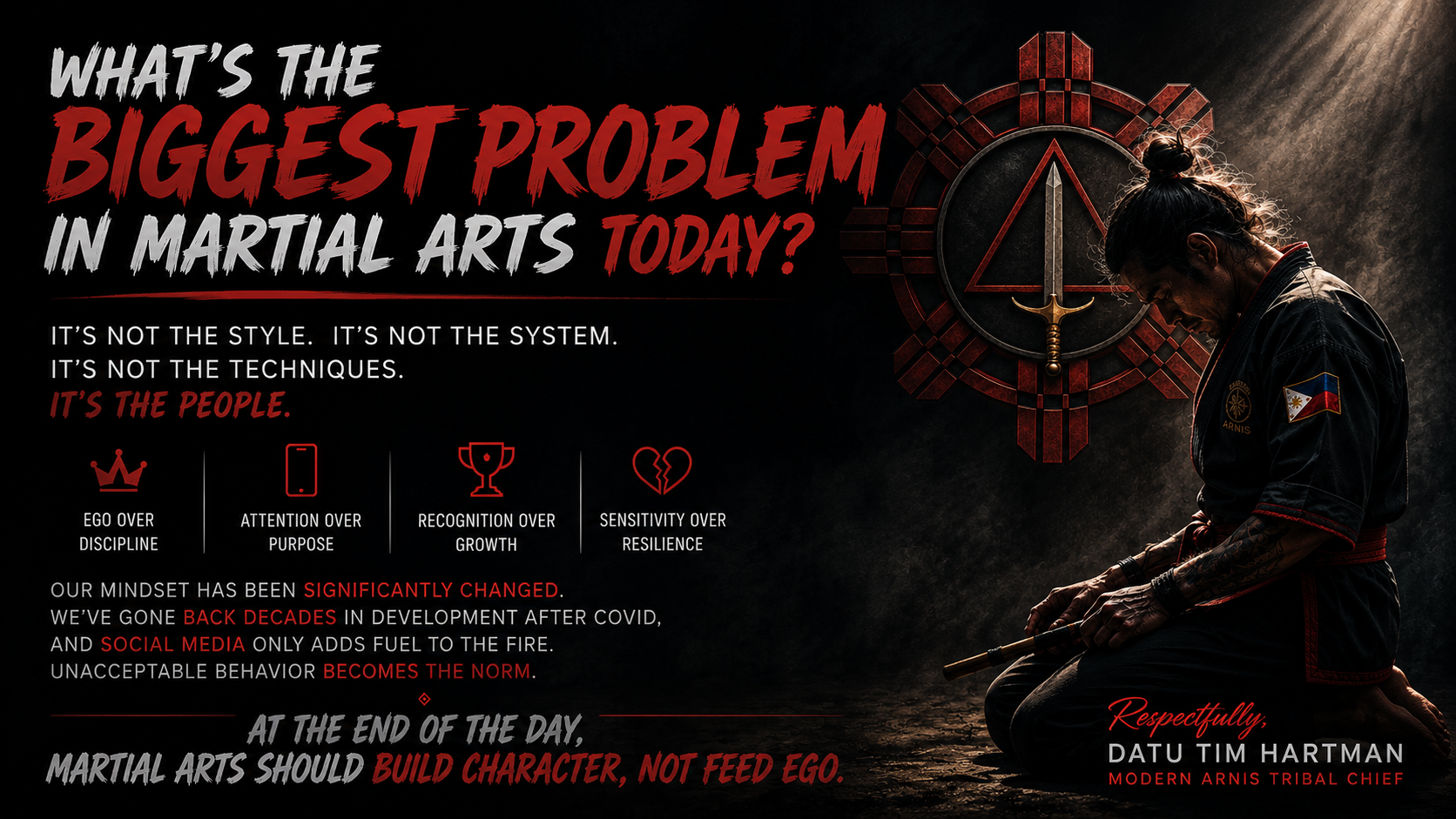
What’s the Biggest Problem in Martial Arts Today?
The answer isn’t simple at all.
That’s a dangerous question because the list is long, far longer than most people want to admit.
We could talk about the growing desire for instant gratification. People want black belts, titles, recognition, and authority without paying the price that generations before them willingly paid. They want the destination without the journey.
We could talk about individuals who have only been training for ten or twenty years but already see themselves as founders, grandmasters, or heads of systems. Instead of becoming a valuable part of something larger than themselves, they become consumed with the need to be the center of attention. They don’t want to be a leader. They want to be the leader. And when that opportunity isn’t handed to them, they simply create their own system so they can sit at the top.
We could talk about ego.
In fact, we probably should.
Martial arts was once about humility, discipline, and self-discovery. Today, too often, it’s about followers, views, likes, and personal branding. The art becomes secondary to the artist. The mission becomes secondary to the spotlight.
We could also talk about training itself.
Years ago, many schools were criticized for being too extreme. The old “dungeon dojo” mentality pushed people beyond reasonable limits. But now we’ve swung so far in the opposite direction that discomfort itself has become controversial. Someone gets a bruise, a sore muscle, or experiences the reality of physical training, and suddenly people act as though a crime has been committed.
The pendulum didn’t stop in the middle.
It flew past it.
Then came COVID.
In my opinion, COVID didn’t just change society—it accelerated many of its existing weaknesses. It isolated people, altered how we interact, and damaged many of the social skills that once helped communities function. Add social media to the equation, and now everyone has a platform, whether they have wisdom to share or not.
The problem is that social media rewards attention, not necessarily knowledge. It rewards outrage, not necessarily truth. It rewards appearance, not necessarily substance.
As a result, behaviors that would have once been considered unacceptable are now celebrated. Poor examples become role models. Loud voices become authorities. Perception becomes reality.
And martial arts is not immune to any of it.
The truth is, we can debate rankings, politics, training methods, certifications, social media, lineage, commercialization, and a hundred other topics. Each deserves its own article.
But if I had to simplify the biggest problem in martial arts today into a single word, it would be this:
People.
People create the systems.
People create the conflicts.
People create the solutions.
And ultimately, people determine whether martial arts remains a vehicle for personal growth or becomes just another stage for ego and self-promotion.
I could write pages on this subject, but for now, I’ll leave it there.
Just my two cents.
Respectfully,
Datu Tim Hartman
Modern Arnis Tribal Chief